


When considering the installation of air conditioning, one of the first questions many people ask is whether they need the council’s approval.
Understanding whether planning permission is required is crucial for avoiding unnecessary delays, fines, or enforcement actions. Whether you’re installing air conditioning in a domestic or commercial setting, ensuring compliance with local regulations is key to a smooth process and peace of mind. This guide will explore when planning permission is necessary, what factors influence the decision, and how to navigate the installation process.
Do You Need Planning Permission for Air Conditioning?
In most cases, planning permission is not required for installing air conditioning in the UK. If the installation does not involve significant structural changes and is done within an existing building, you generally won’t need permission. However, there are certain exceptions and factors to consider that may alter this.
Some Exceptions
While minor installations generally don’t need planning permission, significant changes or extensions to the building may require it. For example, adding air conditioning systems that involve creating new openings in walls or installing large external units might trigger the need for planning permission.
It’s worth remembering that with or without planning permission, you may still need to comply with Building Regulations. These regulations ensure that air conditioning systems are installed safely and efficiently. Non-compliance can result in fines or enforcement actions.
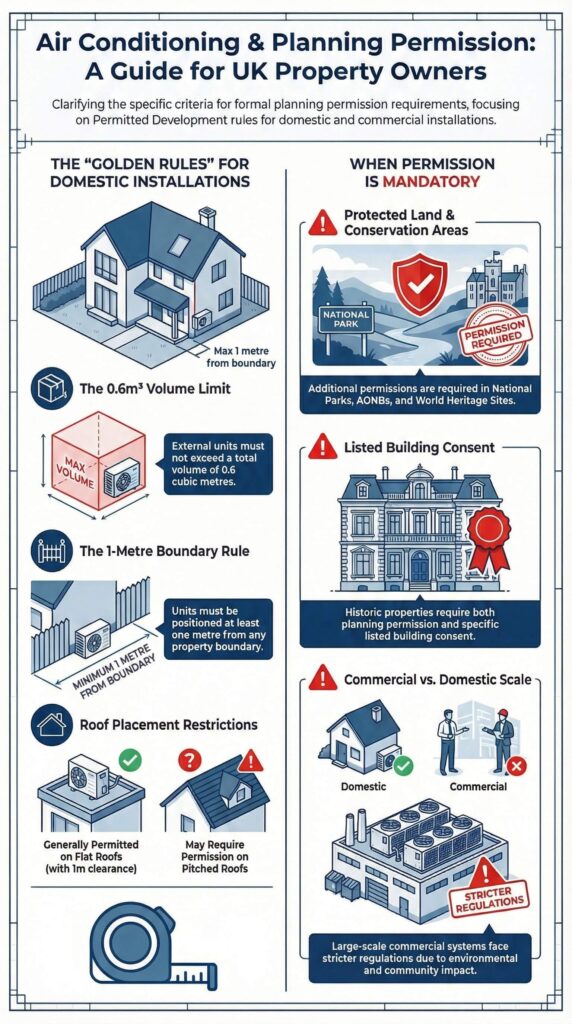
Factors Influencing Planning Permission
Several factors affect whether planning permission is required for your air conditioning installation.
These include:
- Type of System: Small, simple systems are less likely to require planning permission than large, complex ones. The size and capacity of the air conditioning system play a key role in whether or not you need permission.
- Location of Installation: The location of the air conditioning unit can also influence whether planning permission is necessary. For example, installing air conditioning in a sensitive area, such as a conservation zone or a recognised National Park, may require special consideration and permissions.
- Changes to Structure: If the installation requires significant alterations to the building, such as placing units on pitched roofs or modifying the exterior, planning permission may be required. These changes can alter the aesthetic or integrity of the structure, thus requiring permission.
The Distance of Your Air Conditioning from Your Boundary
To avoid the need for planning permission, specific guidelines for the positioning of external air conditioning units must be followed:
- Clearance Rules: External units must be installed at least one meter away from property boundaries to avoid requiring planning permission.
- Flat Roof Installation: If the system is installed on a flat roof, it must also be positioned at least one meter from the edge of the roof to avoid the need for planning permission.
- Size Restrictions: To avoid requiring planning permission, external units should have a volume of no more than 0.6m³. Units larger than this may require further approval.
Domestic Air Conditioning Regulations
For most domestic installations, planning permission is not needed if the air conditioning system complies with size, distance, and placement regulations. However, there are some important exceptions:
When Planning Permission is Not Needed:
- If the external unit meets the size and distance requirements (e.g., under 0.6m³ and at least one meter away from boundaries)
- Installation on a flat roof with proper clearance
- The unit is not installed on a pitched roof
The Exceptions
Properties situated on designated land, such as National Parks, Areas of Outstanding Natural Beauty (AONBs), Conservation Areas, or World Heritage Sites, may need additional planning permission despite meeting basic criteria.
Our Top Tip: Always check local regulations in these cases.
Commercial Air Conditioning Regulations
In commercial settings, larger or more complex systems may require planning permission. The size, complexity, and potential environmental impact of such systems are key factors in determining whether planning permission is needed. For example, systems that affect the local environment or nearby properties may need additional approvals.
Usually, commercial air conditioning systems face stricter regulations due to their potential impact. In addition to planning permission, commercial systems might have additional legal requirements to ensure they don’t negatively affect the local community or environment.
Air Conditioning Legal Requirements and Restrictions
In addition to planning permission, several other legal considerations need to be taken into account when installing air conditioning:
Listed Building Consent
If you’re installing air conditioning in a listed building, both planning permission and listed building consent may be required. This ensures that the installation does not damage or alter the character of the historic property.
Noise Pollution
While there are no specific laws regulating noise levels from air conditioning units, it’s important to install the system in a way that minimises disruption to neighbours. The placement of external units should consider noise impact, particularly in residential areas.
F-Gas Regulations
For systems using refrigerants, particularly in large commercial systems, ensure an accredited contractor handles the installation. These regulations govern the handling and maintenance of refrigerants that can be harmful to the environment.
Building Regulations
Depending on the type and scope of the installation, you may need to adhere to building regulations. These regulations ensure the air conditioning system is energy-efficient, safe, and suitable for the building in which it’s installed.
Installing Domestic Air Conditioning Systems vs Commercial Installations
On the whole, domestic air conditioning systems are typically smaller projects and don’t require planning permission if they comply with the relevant size, distance, and placement regulations. It’s essential to check local authority guidelines if you live in a designated area or have a listed building.
Commercial installation projects, however, are often larger and more complex, meaning they are subject to stricter regulations. These systems may require planning permission and adherence to additional legal requirements to protect the local environment and surrounding properties.
So, Do I Need Planning Permission for My Air Conditioning?
In general, planning permission is not needed for smaller domestic air conditioning systems as long as they meet specific criteria, including size, placement, and distance from boundaries. However, for larger systems, especially those in sensitive or protected areas or for commercial installations, planning permission may be required.
It is always advisable to consult with your local council before proceeding with installation. By doing so, you can ensure that your installation complies with local regulations and avoid potential fines or delays.
Key Reminders
- Always check with local authorities if you are unsure whether planning permission is required.
- Ensure compliance with all relevant regulations, including noise pollution and F-Gas requirements.
- Meeting the specific criteria for size, distance, and placement can help avoid unnecessary delays or fines.
By following the proper steps and complying with local regulations, you can ensure that your air conditioning installation is hassle-free and fully legal. And, if you’re unsure, our team is on hand to guide you through your residential or commercial installation. Contact us today.
Image by mindandi on Freepik