

Image by Freepik
When you think of air conditioning, summer is likely the first thing that comes to mind. But what if we told you that using your AC unit to heat your home could actually save you money? It might sound counterintuitive, but in certain situations, it’s a viable option.
In this blog, we’ll explore the surprising benefits of using air conditioning for heating, delve into the factors that influence cost savings, and provide insights to help you decide if it’s the right choice for your home.
Quick Overview: Why Heat With an AC?
Before diving deeper into the details, let’s summarise the key points:
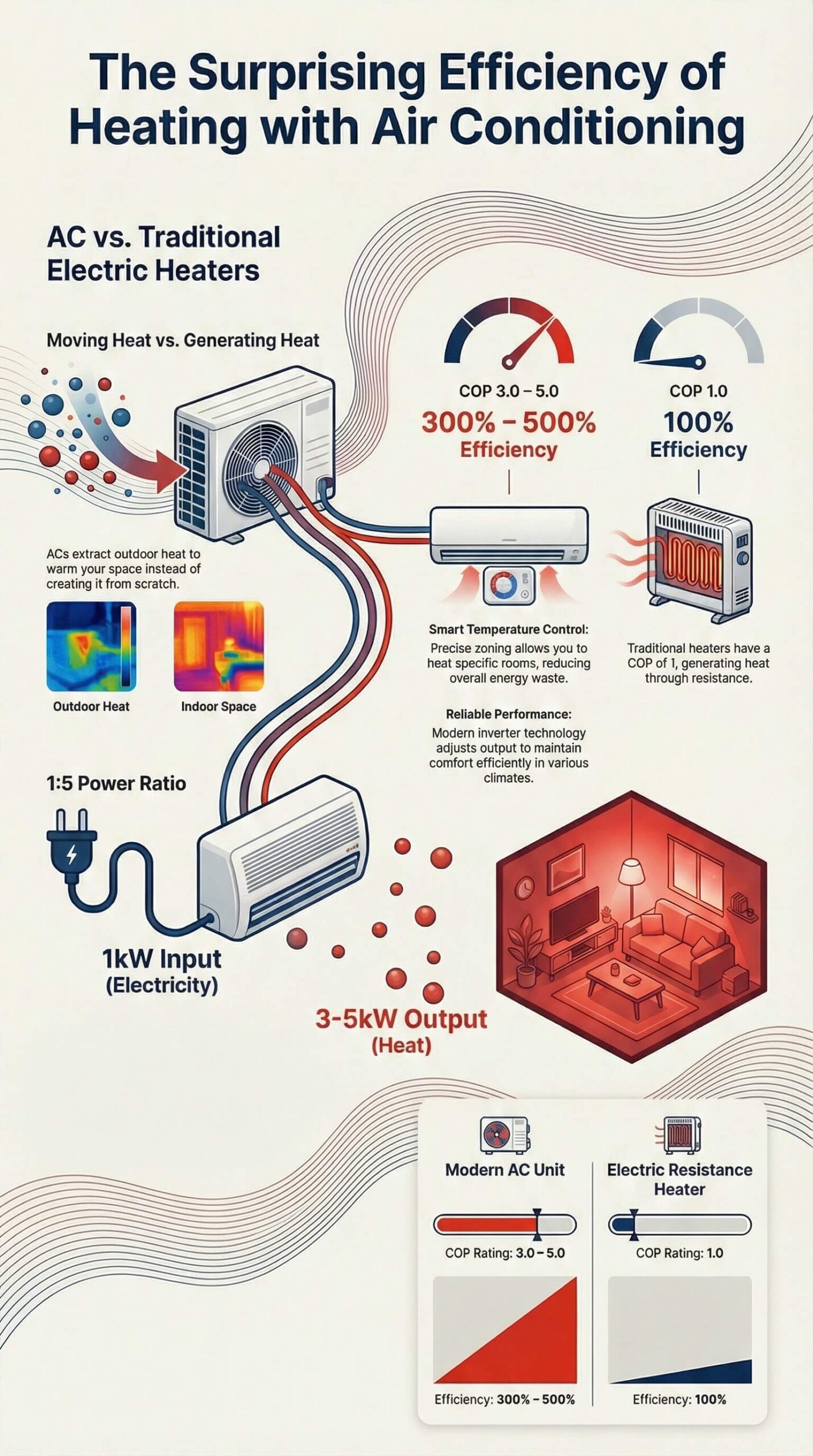
- Heat Pump Efficiency: Modern air conditioning systems, specifically heat pumps, achieve impressive efficiency ratings of 300-600% compared to electric resistance heating.
- Power Output: For every kilowatt of electricity consumed, a typical air conditioning system can produce between 3-5 kilowatts of heat.
These advantages make air conditioning systems not only viable for heating but also cost-effective in many cases.
Why Use Air Conditioning Systems to Heat Your Home?
While it may seem unconventional, there are several compelling reasons to consider using your air conditioning system for heating.
Efficient and Precise Heating
One significant advantage is the efficient and precise heating it offers. Air conditioning systems, including split systems and HVACs, provide targeted comfort with precise temperature control, ensuring your home remains comfortable at all times. Many of these systems also feature zoning capabilities, allowing you to heat specific areas of your home. This targeted approach not only enhances comfort but also reduces energy consumption and improves overall efficiency.
Energy Savings
Another benefit is the potential for energy savings. By using your air conditioning for heating during off-peak hours, you can often take advantage of lower electricity rates, leading to reduced energy costs. Furthermore, relying on your air conditioning as a primary heating source can decrease your dependence on less efficient heating methods, resulting in additional savings.
Improved Air Quality
In addition to comfort and cost efficiency, air conditioning systems can also improve indoor air quality. They work by circulating air and filtering out pollutants, making them an excellent choice for individuals with allergies or respiratory sensitivities.
While using your air conditioning for heating may not be ideal in every climate or situation, it is worth considering if you seek an efficient, comfortable, and potentially cost-effective way to heat your home.
A Closer Look at Air Conditioning Heating Capabilities
Air conditioning systems, including split systems and HVACs, offer a range of effective heating methods:
- Powerful Heating Capacity: These systems are designed to provide strong heating, ensuring your home remains warm and cosy during the coldest months.
- Quick Heating: Experience rapid temperature rises, delivering immediate comfort when you need it most.
- Precise Temperature Control: Enjoy the flexibility to set and maintain your desired temperature consistently throughout your home.
- Zoning Options: Some models allow for independent heating of specific areas, enhancing customisation and comfort.
- Supplemental Heating: Many systems feature supplemental heating elements that provide an extra boost during extreme cold spells.
- Energy-Efficient Operation: Designed for optimal performance, these systems help you save on energy costs while keeping your home comfortable.
By evaluating your specific needs and preferences, you can choose the ideal air conditioning system to ensure year-round comfort.
Top Benefits of Using Heating and Air Conditioning Units
So, what are the top benefits of using heating and air conditioning units that can enhance comfort, efficiency, and air quality in your home year-round?
Year-Round Comfort
One of the most significant advantages of using heating and air conditioning units is the ability to maintain a comfortable indoor temperature throughout the year. During the summer months, these units can provide cooling relief, while in the winter, they can offer warmth and cosiness. This ensures that your home is always a pleasant and inviting space, regardless of the weather outside.
Improved Air Quality
Heating and air conditioning units can also help to improve indoor air quality. Many systems come equipped with air filters that can remove pollutants, allergens, and other contaminants from the air. This can be particularly beneficial for individuals with allergies, asthma, or other respiratory issues. Additionally, these units can help to circulate air throughout your home, reducing the buildup of stale air and promoting a healthier living environment.
Increased Home Value
Installing a high-quality heating and air conditioning system can also increase the value of your home. Potential buyers are often attracted to properties with modern and efficient HVAC systems, as they know that these systems can provide significant comfort and convenience. Moreover, a well-maintained HVAC system can help to reduce energy costs, making your home more attractive to buyers who are looking for both comfort and affordability.
Energy Efficiency
Modern heating and air conditioning units are designed to be highly energy efficient, meaning they can provide the same level of comfort while consuming less energy. This can result in significant savings on your utility bills and reduce your carbon footprint. Many of these systems come with features such as programmable thermostats and efficient cooling technologies that can help you optimise energy consumption.
Reduced Maintenance Costs
While all HVAC systems require regular maintenance, modern units are often designed to be more reliable and require less frequent service. This can help to reduce overall maintenance costs over the long term. Additionally, regular maintenance can help to ensure that your system is operating at its peak efficiency, which can further reduce energy consumption and costs.
Can Using Air Conditioning to Heat My Home Save Money?
Using air conditioning in your home for heating can save money, but it depends on several factors. In milder climates, air conditioning may be more efficient than traditional heating methods, especially during brief cold spells.
Energy rates play a crucial role; if your supplier offers lower off-peak rates, heating with air conditioning during those times can reduce costs. The efficiency of your system is also important—modern units tend to be more energy-efficient than older models.
If you only need to heat specific rooms, air conditioning can provide targeted heating that may be more efficient than central heating. Finally, comparing the costs of air conditioning with other heating methods will help you determine if it’s a financially viable option.
Overall, while air conditioning can be cost-effective in certain situations, it’s essential to consider your climate, energy rates, and specific needs before deciding.
Is Air Conditioning More Efficient than Central Heating?
It depends. In milder climates, air conditioning systems can be more efficient than traditional central heating, especially when used strategically. However, during severe cold spells, central heating may be more effective and cost-efficient.
The UK is now experiencing milder winters, and the average temperature has risen about 1°C since the 1980s. This trend, driven by climate change and shifts in the jet stream, results in fewer cold spells and increased rainfall. As a result, many homeowners can explore more cost-effective heating options.
Using air conditioning units for heating can be cheaper than traditional central heating systems. During milder winter months, these units can effectively maintain comfortable indoor temperatures, reducing reliance on more expensive heating methods for a boost in cold snaps. This shift not only helps lower energy costs but also promotes a more sustainable approach to home heating as the climate continues to change.
Could Air Conditioning Save You Money on Your Heating Bills?
Potentially. With the changes to UK weather, using an efficient air conditioning system, and making the most of off-peak electricity rates, you could save money on your heating bills. However, it’s crucial to carefully evaluate your specific situation to determine if air conditioning is the most cost-effective heating option for you.
Efficiency Metrics: Key Performance Indicators
When considering air conditioning for heating, it’s essential to understand the key performance metrics:
- Coefficient of Performance (COP) Ratings: Typically, the COP for modern air conditioning systems ranges from 3 to 5, meaning that for every kilowatt of electrical energy used, the system can provide 3-5 kilowatts of heating output.
- Seasonal Energy Efficiency Ratio (SEER) Values: Different systems come with varying SEER ratings. Systems with higher SEER values are more energy-efficient, especially in moderate climates.
- Specific Efficiency Ratios: Air conditioners are extremely efficient, producing approximately 5 kW of heat for each kW of electrical energy used (as referenced in Daikin’s performance data).
- Performance Across Temperature Ranges: The efficiency of these systems can vary based on outdoor temperatures. In milder weather, the COP can increase, providing even greater efficiency.
Calculating COP
When it comes to heating, an important performance metric to understand is the Coefficient of Performance (COP). This ratio measures the efficiency of heating devices like air conditioners and heat pumps. It represents how much heat energy is produced for each unit of electrical energy consumed.
It is a crucial factor as it tells you how efficiently your air conditioner is operating. A higher COP means less electricity is consumed for the same amount of heat, reducing both your energy bills and carbon footprint. In simple terms, a higher COP means the system is more efficient at converting electrical power into heating output.
COP = Heat Output divided by Electrical Input
How Does COP Work in Heating Mode?
When an air conditioner operates in heating mode, it extracts heat from the outside air (even in cold weather) and transfers it inside to warm your space. The COP for heating can vary based on several factors:
- Outdoor Temperature: The colder it is outside, the harder the unit has to work to extract heat.
- Indoor Temperature: The higher the indoor temperature you want, the more energy the AC consumes.
- Efficiency of the Unit: Inverter technology and modern heat pumps can adjust their output to match demand more efficiently than older, non-inverter systems.
Example Calculation for Heating Mode
Let’s say you have a heat pump with the following specifications:
- Heat Output: 4.5 kW
- Input Electrical Power: 1.5 kW
To calculate the COP:
COP = 4.5 kW divided by 1.5 kW = 3
This means for every 1 kW of electricity used, the system produces 3 kW of heat energy. A COP of 3 is considered quite efficient, and in many cases, COPs of 3 to 4 are typical for modern heat pump systems.
How Does COP Compare to Traditional Heating?
Traditional electric heaters, such as resistance heaters, typically have a COP of 1, meaning they convert electrical energy directly into heat, with 100% efficiency. However, air-source heat pumps and reverse-cycle air conditioners are much more efficient because they move heat instead of generating it, allowing for COPs greater than 1.
Cost Analysis: Running Air Conditioning for Heating
While installation costs for air conditioning systems vary, they offer significant savings over time compared to traditional heating methods. For example, replacing an old non-condensing boiler with a multi-air conditioning system can lead to substantial annual savings on energy bills.
- Energy Prices: In the UK, electricity prices are typically higher than gas prices per kWh. However, the high efficiency of air conditioners means they use less energy to provide the same amount of heat, potentially reducing overall heating costs.
- Annual Running Cost Comparison: If you replace your gas heating system with air conditioning, annual running costs can be significantly lower. A typical comparison can be made using the per kWh costs of electricity vs gas.
Payback Period: The payback period for air conditioning systems can vary, but typically, you can expect to recover your installation costs within 5-7 years due to the energy savings.
6 Things to Consider Before Getting Air Conditioning for Heating
Before deciding to use air conditioning for heating, it’s essential to weigh several key factors.
1. Climate
The severity of winters in your region is a crucial consideration. In areas with extremely cold winters, air conditioning may not be the most efficient or cost-effective heating solution. Additionally, think about how often temperatures fluctuate throughout the winter; if they remain relatively mild, air conditioning could be a viable option.
2. Home Insulation
A well-insulated home can retain heat more effectively, making air conditioning a more efficient choice. Conversely, if your home is poorly insulated, it may require more energy to maintain a comfortable temperature, potentially offsetting any savings you might gain from using air conditioning.
3. System Efficiency
The Seasonal Energy Efficiency Ratio (SEER) is an important measure of an air conditioning system’s efficiency. Units with a higher SEER rating are generally more energy-efficient. Regular maintenance is also crucial for ensuring optimal performance and longevity, so consider the potential costs associated with upkeep and repairs.
4. Energy Rates
Investigate whether your electricity supplier offers time-of-use tariffs. Using air conditioning during off-peak hours can significantly reduce costs. Additionally, check if your local government provides any incentives or rebates for energy-efficient heating and cooling systems.
5. Alternative Heating Options
It’s important to compare the costs and benefits of using air conditioning for heating against other options, such as central heating, electric heaters, or fireplaces. This will help you determine the most economical and effective heating solution for your home.
6. Lifestyle and Preferences
Consider your personal preferences for temperature and humidity control. Air conditioning systems offer precise temperature regulation, but if noise is a concern, research the noise levels of different models to find one that suits your comfort needs.
By thoughtfully considering these factors, you can make an informed decision about whether using air conditioning for heating is the right choice for your home. If you’re unsure about the best option for your needs, our experts are here to help. Contact us today for advice and assistance in finding the ideal product for you.
FAQ
Is Heating with AC Efficient?
Yes, heating with an air conditioner can be highly efficient. Modern heat pumps, for example, have a COP rating of 3-5, meaning they can produce 3-5 times the amount of heat for each unit of energy consumed. This makes them a far more efficient option than traditional electric heaters.
Is It Cheaper to Heat with an Air Conditioner?
It can be, depending on several factors such as energy prices, the efficiency of your system, and how often you use heating. Air conditioners generally have lower operational costs compared to gas boilers, especially in milder climates. Installation costs may be higher, but the energy savings over time can offset this.
How Much Does It Cost to Run an Air Conditioner for Heating?
In the UK context, the cost of running an air conditioner depends on electricity rates, the unit’s efficiency (COP), and how often the system is used. On average, running an air conditioner for heating could cost around 20-70 pence per hour, based on local electricity prices and the system’s efficiency. To get a more accurate estimate, refer to your energy provider’s rates and your system’s specifications.