


We understand that choosing the right air conditioning system for your property or business is a big decision. One of the most popular and efficient options is ducted air conditioning, which provides whole-house comfort with minimal visual impact. But how does ducted air conditioning work, and is it the right choice for your needs?
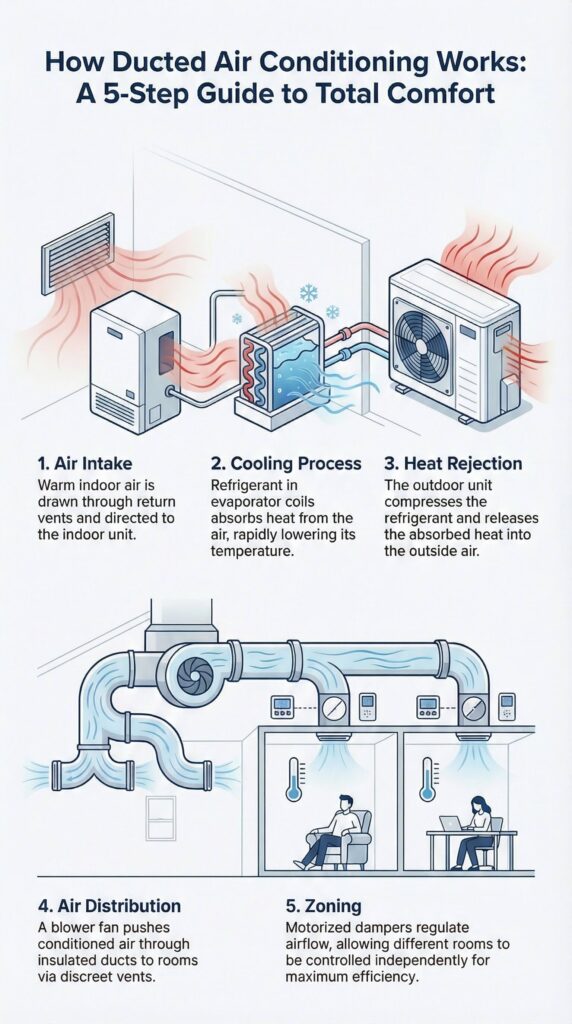
Ducted air conditioning works by delivering cooled or heated air to every room through a concealed network of ducts. The system draws warm air from inside the building into an indoor unit, where it is filtered and conditioned before being circulated back through ceiling or floor vents. Meanwhile, the outdoor unit releases any excess heat to maintain efficient temperature control. This seamless process ensures consistent comfort throughout the entire property with minimal noise and visual disruption.
In this comprehensive guide, we’ll explain the mechanics of ducted systems, their benefits, and potential drawbacks and answer the most common questions to help you make an informed decision.
What is Ducted Air Conditioning?
Ducted air conditioning is a centralised cooling (and heating) solution designed to provide consistent and efficient temperature control across multiple rooms or zones. Unlike wall-mounted or portable units, ducted systems are installed discreetly within your property’s ceiling or floor space and distribute conditioned air through a network of ducts and vents.
Key components include:
- Indoor Unit (evaporator): The main unit that cools (or heats) the air. This is typically located in the ceiling or under the floor.
- Outdoor Unit (condenser): This unit expels the heat absorbed from inside, keeping your commercial property or business cool.
- Ductwork: A system of ducts that transports conditioned air to various rooms or zones in your property.
- Thermostat or Zoning Control: A system for adjusting and managing the temperature in different areas.
How Ducted Air Conditioning Works
- Step 1: Air Intake: Warm indoor air is drawn through return vents and directed to the indoor unit, where the cooling (or heating) process begins.
- Step 2: Cooling Process: Inside the indoor unit, the air passes over an evaporator coil filled with refrigerant. As the refrigerant absorbs heat from the air, it changes from a liquid to a gas, rapidly lowering the air temperature.
- Step 3: Heat Rejection: The now-heated refrigerant gas travels to the outdoor unit. Here, the compressor pressurises the gas and the condenser coil releases the absorbed heat into the outside air, allowing the refrigerant to return to its liquid state.
- Step 4: Air Distribution: The cooled (or heated) air is then pushed through a network of insulated ducts and delivered to each room via discreet vents. A powerful blower fan ensures consistent airflow throughout the property.
- Step 5: Zoning: Many ducted systems offer zoning capabilities, enabling different rooms or areas to be controlled independently. Motorised dampers inside the ductwork regulate airflow to each zone, improving comfort and energy efficiency.
Types of Ducted Air Conditioning Systems
There are different types of ducted systems to suit your needs:
- Traditional Ducted Systems: These systems are designed for larger spaces and can provide whole-property or whole-business cooling (and heating) from a single centralised unit.
- Reverse Cycle Ducted Systems: These systems offer both heating and cooling, making them a cost-effective year-round solution for commercial spaces and businesses.
- Zoned Ducted Air Conditioning: Zoned systems allow for different areas or rooms of your property to be cooled independently, which can save energy and provide more personalised comfort.
The Benefits of Ducted Air Conditioning
— Coverage area capabilities
–Installation complexity ratings
— Aesthetic impact (visible vs concealed)
–Energy efficiency (SCOP ratings)
— Maintenance requirements
–Initial investment vs long-term costs
Choosing a ducted system offers several advantages:
- Whole-Space Comfort: A ducted system is ideal for cooling commercial spaces and businesses. It delivers consistent comfort throughout the space, ensuring uniform temperature control in all rooms.
- Discreet and Quiet: Ducted systems are hidden from view, with only vents visible on your ceilings or floors. They are also quieter than wall-mounted units, as the main components are installed out of sight.
- Precise Temperature Control: With modern thermostats and zoning capabilities, you can set different temperatures for different areas of your property, offering greater control and comfort.
- Aesthetic Benefits: The system integrates seamlessly with your property’s or business’s interior design without bulky units or unsightly equipment.
- Wide Coverage Capabilities: Ducted air conditioning is designed to service large or multi-room properties with ease. Whether you’re cooling a single open-plan area or an entire building, the system ensures even coverage across all zones.
- Installation Complexity: While ducted systems offer significant benefits, they do require professional installation and adequate ceiling or underfloor space for ductwork. Although the process is more complex than installing split systems, it results in a long-term, high-performance solution.
- Visible vs. Concealed Design Impact: One of the key advantages of ducted air conditioning is its minimal visual impact. All major components are concealed, leaving only low-profile vents visible, preserving the architectural integrity of your space.
- Energy Efficiency (SCOP Ratings): Modern ducted systems are designed with high Seasonal Coefficient of Performance (SCOP) ratings, meaning they deliver efficient heating and cooling throughout the year. Higher SCOP values translate to lower running costs and improved sustainability.
- Maintenance Requirements: Routine maintenance, such as filter cleaning, duct inspections, and system servicing, keeps the unit running efficiently. While maintenance is relatively straightforward, regular servicing is essential to maximise lifespan and performance.
- Initial Investment vs. Long-Term Costs: Although ducted air conditioning typically requires a higher upfront investment compared to other systems, it offers excellent long-term value. Energy-efficient operation, improved comfort, and enhanced property appeal often outweigh the initial cost over the system’s lifespan.
Common Problems and Maintenance of Ducted Air Conditioning
While ducted air conditioning systems are highly efficient, regular maintenance is key to keeping them running smoothly.
- Airflow Issues: Blocked filters, dirty ducts, or undersized ducts can lead to poor airflow and uneven cooling. Regular cleaning and inspection will ensure that air flows freely throughout your system.
- Refrigerant Leaks: If there’s a refrigerant leak in the system, the air conditioning unit will struggle to cool effectively. It’s essential to get this checked during routine maintenance.
- Regular Servicing: To avoid issues with airflow and cooling performance, it’s recommended that your system be serviced at least once a year. This helps extend its lifespan and ensures maximum efficiency.
Energy Efficiency and Running Costs
Ducted air conditioning systems are generally energy-efficient, especially when you opt for a reverse cycle or zoned system. By cooling or heating only the areas that need it and using modern inverter technology, ducted systems can be much more energy-efficient than older models or other types of air conditioning.
Key energy-saving tips include:
- Optimising thermostat settings to avoid overcooling or overheating.
- Regular maintenance to ensure the system is operating at its highest efficiency.
- Using zoning to cool only the rooms that are in use rather than the whole property.
While initial installation costs can be higher, ducted systems can provide significant long-term savings due to their efficiency.
Ducted Air Conditioning Costs in the UK
Understanding the cost of ducted air conditioning is essential when planning your installation. Prices can vary depending on the size of your property, the complexity of the ductwork, and the level of zoning required. Below is a general guide to UK-specific installation costs:
Small Homes (2–3 rooms): Typical installation cost: £8,000-£15,000
Ideal for compact properties or small commercial spaces requiring uniform comfort across a limited number of rooms.
Medium Homes (4–6 rooms): Typical installation cost: £15,000-£25,000
Suitable for standard family homes or medium-sized business premises needing consistent temperature control across multiple areas.
Large Homes (7+ rooms): Typical installation cost: £25,000-£40,000+
Best for large residences, open-plan layouts, and commercial environments where full-property climate control is required.
Running Costs
Ducted air conditioning is designed to operate efficiently, especially when paired with modern inverter technology and zoning features. In the UK, typical running costs range from:
£200-£600 per room annually.
Actual costs vary depending on:
- How often the system is used
- Energy tariffs
- SCOP (Seasonal Coefficient of Performance) efficiency ratings
- Whether the system is zoned
- Property insulation levels
Zoned ducted systems generally cost less to run, as they prevent unused areas from being unnecessarily cooled or heated.
Installation of Ducted Air Conditioning
Installing a ducted system involves more than just setting up an air handler and placing ducts. The process requires:
- Site Assessment: A professional installer will assess your property to determine the ideal system size and ductwork layout.
- Duct Installation: Ducts are typically installed in the ceiling or under the floor, depending on the design of your property.
- System Setup: The indoor and outdoor units are connected, and the control panel is programmed to ensure your system works efficiently.
- Testing: After installation, the system is tested to ensure it’s running smoothly and efficiently.
Other Considerations
Cost
Installation costs can vary depending on factors such as the size of the property, the complexity of the ductwork, and additional features like zoning. We offer tailored solutions to fit your needs and budget.
Regulations
In the UK, air conditioning systems must comply with the Building Regulations (including Part L for energy efficiency), as well as other local requirements such as the F-Gas Regulations (for refrigerants), especially for systems using fluorinated greenhouse gases (such as R410A or R32).
How Long Does a Ducted Air Conditioning System Last?
With proper care, a ducted air conditioning system can last 15-20 years. Regular servicing, including cleaning filters, checking refrigerant levels, and inspecting the ducts, will extend the lifespan of your system and keep it running efficiently for many years.
Is Ducted Air Conditioning Right for You?
Ducted air conditioning is a great solution for properties and businesses looking for consistent temperature control and high comfort levels. However, it’s not for everyone.
Consider ducted air conditioning if:
- You have a large property or multiple rooms that need cooling.
- You prefer a quiet and discreet system with no visible units.
- You’re looking for a year-round solution (heating and cooling).
However, if:
- You live in a small home or apartment.
- You rent and cannot make structural changes.
- You have a limited budget for installation; other systems may be more suitable.
Comparison with Other Air Conditioning Systems
When choosing an air conditioning system for your property or business, it’s important to consider the different types of systems available and how they compare to a ducted system. In the UK, split systems and portable air conditioners are some of the most common alternatives to ducted air conditioning. Each option has its benefits and limitations, depending on factors like property size, budget, and long-term energy savings. Here’s a brief comparison of ducted air conditioning with these popular systems:
Ducted Air Conditioning vs. Split Systems
– System Comparison Guide (Target: “ducted vs split air conditioning”)
— Reference competitor: https://blossomaircon.com/how-does-ducted-air-conditioning-work/
— Create comparison table:
Split air conditioning systems are one of the most commonly used types of air conditioning in the UK. These systems consist of an indoor unit (typically wall-mounted) and an outdoor unit. They are well-suited for cooling or heating individual rooms and are more affordable and less invasive than ducted systems.
Pros and Cons of Split Systems
| Pros | Cons |
| Cost-Effective – Lower upfront installation costs than ducted systems; ideal for single rooms or smaller spaces. | Limited Coverage – Only conditions one room at a time; larger properties require multiple units. |
| Simple Installation – No ductwork needed; easy to retrofit into existing properties. | Visual Impact – Indoor wall-mounted units can be intrusive compared to concealed ducted vents. |
| Compact & Flexible – Fits in most rooms, great for smaller homes and allows targeted temperature control. | Higher Running Costs – Running several units simultaneously increases energy usage and long-term costs. |
Pros of Split Systems
- Cost-Effective: Split systems generally have a lower upfront installation cost compared to ducted systems, making them a more budget-friendly option for smaller spaces or individual rooms.
- Simple Installation: They are easier to install since they don’t require ductwork or the integration of multiple components throughout the building. This makes them ideal for retrofitting into existing properties.
- Compact and Flexible: Split systems are ideal for homes or rooms where space is limited, and they can be installed in virtually any room. They also allow you to control the temperature in specific areas, which can be a more efficient solution for smaller homes or apartments.
Cons of Split Systems
- Limited Coverage: Split systems only cool or heat one room at a time. If you have a large home or multiple rooms that need conditioning, you would require multiple split units, which could be costly and visually less appealing.
- Visual Impact: The indoor units of split systems are typically mounted on the wall, which can be visually intrusive. This is in contrast to ducted systems, which are hidden within the ceiling or floors, providing a more seamless, aesthetically pleasing solution.
- Higher Running Costs: If you have multiple split units running at once, the energy consumption can add up quickly, making it a more expensive option in terms of long-term running costs compared to a zoned ducted system.
Ducted Air Conditioning vs. Portable Air Conditioners
Portable air conditioners are an increasingly popular choice in the UK, especially in properties where a more permanent air conditioning system is not feasible. These units are typically placed in a room and can be moved from space to space as needed. They require minimal installation, with just a hose venting hot air out through a window or wall.
Pros of Portable Air Conditioners
- No Installation Required: Portable units are easy to set up and don’t require professional installation. You simply plug them in, connect the hose to a window or vent, and you’re ready to go.
- Flexible: They can be moved from room to room, allowing you to cool the areas you use the most. This flexibility can be ideal for renters or those who want a temporary cooling solution.
- Cost-Effective for Small Spaces: For small rooms or temporary cooling needs, portable air conditioners can be an affordable and practical choice. They are also lower in upfront cost compared to ducted systems.
Cons of Portable Air Conditioners
- Limited Efficiency: Portable air conditioners are less energy-efficient than both ducted and split systems. They tend to cool only small spaces effectively, and their performance drops significantly in larger areas.
- Noise: These units can be noisy, especially in the compressor area, which is located inside the room. This can be distracting or disruptive in living or sleeping areas.
- Temporary Cooling: While convenient, portable air conditioners are not ideal for providing whole-property cooling. They may struggle to maintain comfortable temperatures in larger or multiple rooms, especially during prolonged periods of hot weather.
- Aesthetic Impact: Portable units take up floor space and can be unsightly, especially in living areas where space is already limited.
A Superior Choice for Larger Properties and Businesses
Ducted air conditioning offers a number of advantages when compared to both split and portable systems, particularly for those looking to cool multiple rooms or an entire property. The key benefits of ducted systems include:
- Whole-Space Cooling and Heating: Ducted systems are ideal for large properties or businesses, offering consistent temperature control across multiple rooms. Unlike split or portable units, which are limited to individual spaces, a ducted system can provide comfort to every room in your property through a centralised unit.
- Aesthetics and Discreet Design: Since ducted systems are hidden within your ceilings or floors, they blend seamlessly with your interior design. The only visible parts are the discreet vents on the walls or ceilings, which are far less intrusive than wall-mounted units in split systems.
- Energy Efficiency: Zoned ducted systems allow you to control temperatures in different areas of the property. This can significantly reduce energy consumption, as you’re only cooling or heating rooms that are in use. Modern inverter technology also ensures that the system runs efficiently, adjusting the compressor speed to match the desired temperature.
- Long-Term Investment: While ducted air conditioning systems can be more expensive to install upfront, they can offer long-term savings due to their energy efficiency and ability to serve an entire property. When installed and maintained properly, they can last 15-20 years, providing reliable comfort year-round.
Weighing Up the Benefits
Each air conditioning system has its own set of advantages and limitations, and the right choice will depend on your specific needs, budget, and property type.
- Ducted systems are ideal for larger properties or those looking for a discreet and efficient way to provide whole-space cooling and heating.
- Split systems are more cost-effective and flexible, providing targeted cooling or heating for individual rooms, though they are less ideal for large spaces.
- Portable air conditioners are the least expensive upfront but are limited to smaller spaces and are not suited for long-term, whole-space comfort.
How We Can Help
Ducted air conditioning is a powerful, efficient, and discreet solution for cooling and heating your commercial or business space. We are committed to helping you choose the best system for your needs. Whether you’re looking for installation, maintenance, or expert advice, our team is here to assist every step of the way.
Ready to enjoy the comfort of a ducted air conditioning system? Contact us today for a free consultation and find out how we can help make your property the perfect temperature all year round.
FAQ
What are the disadvantages of ducted air conditioning?
While ducted air conditioning offers many benefits, it does come with a few disadvantages. One of the primary drawbacks is the high initial installation cost. Ducted systems typically require a more significant upfront investment compared to other types of air conditioning, as they involve not only the purchase of indoor and outdoor units but also the installation of extensive ductwork throughout the property. Additionally, maintenance is essential to ensure optimal performance. Ducts and filters need regular cleaning to prevent blockages and maintain air quality, which can add to the ongoing cost of ownership. Another potential disadvantage is the space required for ducts and vents. Ducted systems need room in ceilings, floors, or walls to accommodate the ductwork, which can be a challenge in smaller homes or buildings with limited space for installation.
How does an air conditioner duct work?
Air conditioner ducts play a crucial role in the distribution of cooled or heated air throughout your home or business. These ducts act as conduits, transporting conditioned air from the central air handling unit (evaporator) to various rooms via vents. The air is pushed through the ducts, ensuring that each room reaches the desired temperature. Properly sized and insulated ducts are essential to ensure efficient airflow, as air must travel long distances without significant energy loss. The system works to balance temperature throughout the entire property, ensuring that every room remains comfortable. The air from the central unit flows through the ducts and out of the vents, helping to maintain consistent indoor conditions, regardless of the number of rooms or floors in your business.
Do you need to open windows with ducted air conditioning?
No, you do not need to open windows when using ducted air conditioning. Ducted systems are designed to recirculate indoor air, cooling or heating it to the desired temperature and then redistributing it throughout the office. The system does not require fresh air intake through open windows, which is a common misconception. Keeping windows closed can help improve the system’s efficiency by preventing warm outdoor air from entering and reducing the load on your air conditioning system. Some advanced systems may offer options for bringing in fresh air or may use ventilation systems for air exchange, but in general, opening windows is not necessary for a ducted air conditioning system to operate effectively.
Does ducted air conditioning use a lot of electricity?
Ducted air conditioning can be energy-efficient, especially with modern features such as zoning, smart thermostats, and inverter technology. Zoning allows you to control the temperature in different areas of your business, which means you can choose only to cool or heat the rooms you are using rather than the entire property. This can significantly reduce electricity consumption. Additionally, inverter technology helps the system run more efficiently by adjusting the compressor speed based on the temperature needs rather than switching on and off frequently, which uses more energy. However, the energy usage of a ducted system ultimately depends on several factors, such as the size of the property, insulation quality, and how often the system is used. For example, larger spaces and higher usage will naturally consume more electricity, but regular maintenance and efficient use can help minimise running costs.
How long does it take to install a ducted air conditioning system?
The installation of a ducted air conditioning system can typically take anywhere from one to several days, depending on various factors. The size and layout of your property play a significant role in determining how long the installation will take. For instance, a simple, single-story property with a straightforward duct layout may take just one or two days. However, for larger properties, multi-storey properties, or buildings with complex ductwork requirements, the installation process may take longer. Other considerations, such as the need to retrofit ductwork into existing structures, can also affect the time needed for installation. A professional installer will assess the property and provide a more accurate timeline based on these variables.
Can I install ducted air conditioning myself?
While it might be tempting to take on an installation project yourself, ducted air conditioning systems should always be installed by a professional. Installing a ducted system involves more than just setting up the air handler and connecting the ductwork; it requires careful planning and expertise to ensure everything is sized correctly and installed safely. A professional installer will ensure that the system meets all local building codes and safety regulations and that it operates efficiently. Proper installation is key to the long-term performance of the system, and improper installation can result in energy inefficiency, poor airflow, and potential system breakdowns. We recommend working with our team of experienced technicians to handle the installation process for you, ensuring the best results and peace of mind.
What is the difference between ducted and split air conditioning?
Ducted systems use hidden ductwork to distribute conditioned air from a central indoor unit to multiple rooms, creating a clean, streamlined look. Split systems, on the other hand, rely on individual wall-mounted units in each room. While ducted air conditioning offers better aesthetics and whole-home comfort, it generally involves higher installation costs.
How long does ducted air conditioning installation take?
Most installations take 2-5 days, depending on the property size, ducting layout, and accessibility. Homes with existing ceiling cavities can be completed more quickly, whereas older or retrofit properties may require additional time.
Can ducted air conditioning heat as well as cool?
Yes, modern reverse-cycle ducted systems provide both heating and cooling through heat pump technology. They are highly efficient and often achieve SCOP ratings above 4.0, meaning strong heating performance even in colder months.
What maintenance does ducted air conditioning require?
Routine care includes annual professional servicing, cleaning or replacing filters every 3-4 months, and periodic ductwork inspections. With proper maintenance, ducted systems typically last 15-20 years.
Is ducted air conditioning suitable for the UK climate?
Absolutely. Today’s ducted heat pump systems are designed for the UK’s moderate climate, providing efficient heating in winter and comfortable cooling in summer. Their year-round performance makes them well-suited to UK homes and commercial spaces.
How much space is needed for ducted air conditioning installation?
Most residential installations require around 400mm of ceiling cavity space to accommodate the indoor unit and ducting. Adequate loft or roof-space access is also essential for installation and future maintenance.